Frequently Asked Questions About Family Law in Fort Lauderdale, FL
Frequently Asked Questions About Family Law in Fort Lauderdale, FL
Family law questions often come at stressful and uncertain moments. Whether you are facing divorce, custody issues, child support, relocation, arbitration, property division, or a post-judgment matter, clear information can help you understand your options before taking the next step.
Monica I. Salis, P.A., helps individuals and families throughout Fort Lauderdale, Broward County, and surrounding South Florida communities with experienced family law and arbitration guidance. This FAQ page brings together common questions from across the website so you can quickly find answers by topic.
Divorce FAQs

How long does divorce take in Florida?
The timeline depends on whether the divorce is contested or uncontested. An uncontested divorce may move faster when both parties agree on key issues. A contested divorce can take longer when there are disputes involving children, support, property, or financial matters.
Do I need a lawyer for divorce in Fort Lauderdale?
A divorce attorney can help protect your rights and avoid costly mistakes. This is especially important when your case involves children, property, business interests, alimony, retirement accounts, or complex financial issues.
What issues are decided in a Florida divorce?
Divorce may involve parenting time, child support, alimony, property division, marital debts, retirement accounts, real estate, and long-term financial concerns. Each case depends on the facts, finances, and family dynamics involved.
Child Custody & Time-Sharing FAQs

What is the difference between custody and time-sharing in Florida?
Florida uses the term "time-sharing" to describe parenting schedules. Time-sharing addresses when each parent spends time with the child and how parenting responsibilities are structured.
How is child support calculated?
Florida child support is based on statutory guidelines. The calculation may consider income, parenting time, healthcare costs, childcare costs, and other financial factors.
Can custody be modified later?
Yes. Custody and time-sharing arrangements may be modified when there has been a substantial change in circumstances. The court will consider whether the requested change supports the child’s best interests.
Child Support & Spousal Support FAQs

How is child support calculated in Florida?
Florida uses statutory guidelines based on income, parenting time, healthcare costs, childcare costs, and other financial factors. Support cases often require careful review of financial records and household needs.
Can alimony be modified later?
In many situations, yes. Modifications may be available when there has been a substantial change in circumstances, such as income changes, job loss, remarriage, relocation, or changes in financial need.
What happens if support is not paid?
The court may impose enforcement remedies, including wage garnishment, contempt proceedings, and other penalties. Enforcement actions may be used when child support or spousal support orders are not followed.
Custody Arrangement FAQs

What is a parenting plan in Florida?
A parenting plan outlines how parents will share responsibilities and time-sharing for their child. It may address weekly schedules, holidays, school breaks, communication, transportation, and decision-making.
How does Florida determine custody arrangements?
Florida courts focus on the best interests of the child when determining parenting schedules. The goal is to create a structure that supports stability, consistency, and healthy child development.
Can custody arrangements be modified later?
Yes. Parenting plans may be modified when there has been a substantial change in circumstances. A modification may be needed after relocation, schedule changes, school changes, or other major life events.
Relocation FAQs

Can a parent move away with a child after divorce in Florida?
Florida law requires court approval or written agreement from the other parent in many relocation situations. Relocation disputes can affect parenting plans, time-sharing schedules, school arrangements, and travel logistics.
What qualifies as relocation under Florida law?
Generally, a move more than 50 miles away for at least 60 consecutive days may qualify as a relocation. Relocation cases require careful planning because they can significantly affect parenting time and family routines.
Can custody arrangements change after relocation?
Yes. Parenting plans and time-sharing schedules are often modified when relocation occurs. The new plan may need to address travel, school calendars, holidays, transportation, and long-distance parenting arrangements.
High-Asset Divorce FAQs

What makes a divorce high-asset?
A high-asset divorce generally involves significant wealth, business ownership, investment holdings, luxury real estate, executive compensation, retirement accounts, or other substantial marital assets.
Can business interests be divided?
Yes. Business interests may be divided depending on how the business was acquired, operated, valued, and classified during the marriage. These cases often require careful financial review.
Are prenuptial agreements enforceable?
Properly drafted and executed agreements are generally enforceable in Florida. These agreements may become especially important in high-asset divorce cases involving property, businesses, inheritance, and support issues.
Property Division FAQs

What is equitable distribution?
Equitable distribution is Florida’s legal process for dividing marital property fairly. This may include real estate, bank accounts, retirement assets, investments, business interests, vehicles, debts, and other marital property.
Is everything divided equally?
Not always. Courts consider several legal factors when dividing marital property and debt. The result must be fair based on the facts of the case, but fair does not always mean equal.
What happens to the family home?
The court may award, sell, or divide the property depending on the case. The decision may depend on children, finances, mortgage obligations, equity, and each party’s ability to maintain the property.
Prenuptial & Postnuptial Agreement FAQs

What is a prenuptial agreement?
A prenuptial agreement is a legal agreement signed before marriage. It may address property rights, debt allocation, business ownership, inheritance protection, and spousal support.
Can married couples create agreements?
Yes. Married couples can create postnuptial agreements. These agreements may help clarify financial expectations, protect assets, and reduce future disputes.
Are these agreements enforceable?
Yes, if properly prepared and executed. A carefully drafted agreement can provide clarity and financial protection before or during marriage.
Alternative Dispute Resolution FAQs

What is ADR?
Alternative Dispute Resolution, often called ADR, is a legal process used to resolve disputes outside of court. ADR may include mediation, arbitration, and negotiated settlement discussions.
Is mediation required?
Many Florida family law cases require mediation before trial. Mediation can help parties work toward agreements without relying on a judge to decide every issue.
Can ADR save money?
Yes. ADR may reduce litigation expenses by helping parties resolve disputes more efficiently. It may also reduce stress, delays, and unnecessary conflict.
Arbitration FAQs
What is family law arbitration?
Family law arbitration is a private dispute resolution process where parties present their legal issues to an arbitrator instead of resolving every matter through a traditional courtroom trial.
Is arbitration different from mediation?
Yes. Mediation is designed to help parties reach an agreement. Arbitration allows an arbitrator to hear the issues and make a decision. Both are forms of alternative dispute resolution, but they serve different purposes.
Can divorce issues be resolved through arbitration?
Yes. Arbitration may be used to resolve divorce-related issues, including property division, support disputes, parenting matters, and other family law concerns when appropriate.
Is arbitration private?
Arbitration is generally more private than traditional courtroom litigation. This can be helpful in family law cases involving sensitive financial, parenting, or personal issues.
Is arbitration faster than going to court?
In many cases, arbitration may move faster than traditional litigation because scheduling can be more flexible than waiting for court dates.
Do I still need an attorney for arbitration?
Yes. An attorney can help you prepare your case, organize evidence, protect your rights, and present your position effectively during the arbitration process.
Restraining Order FAQs
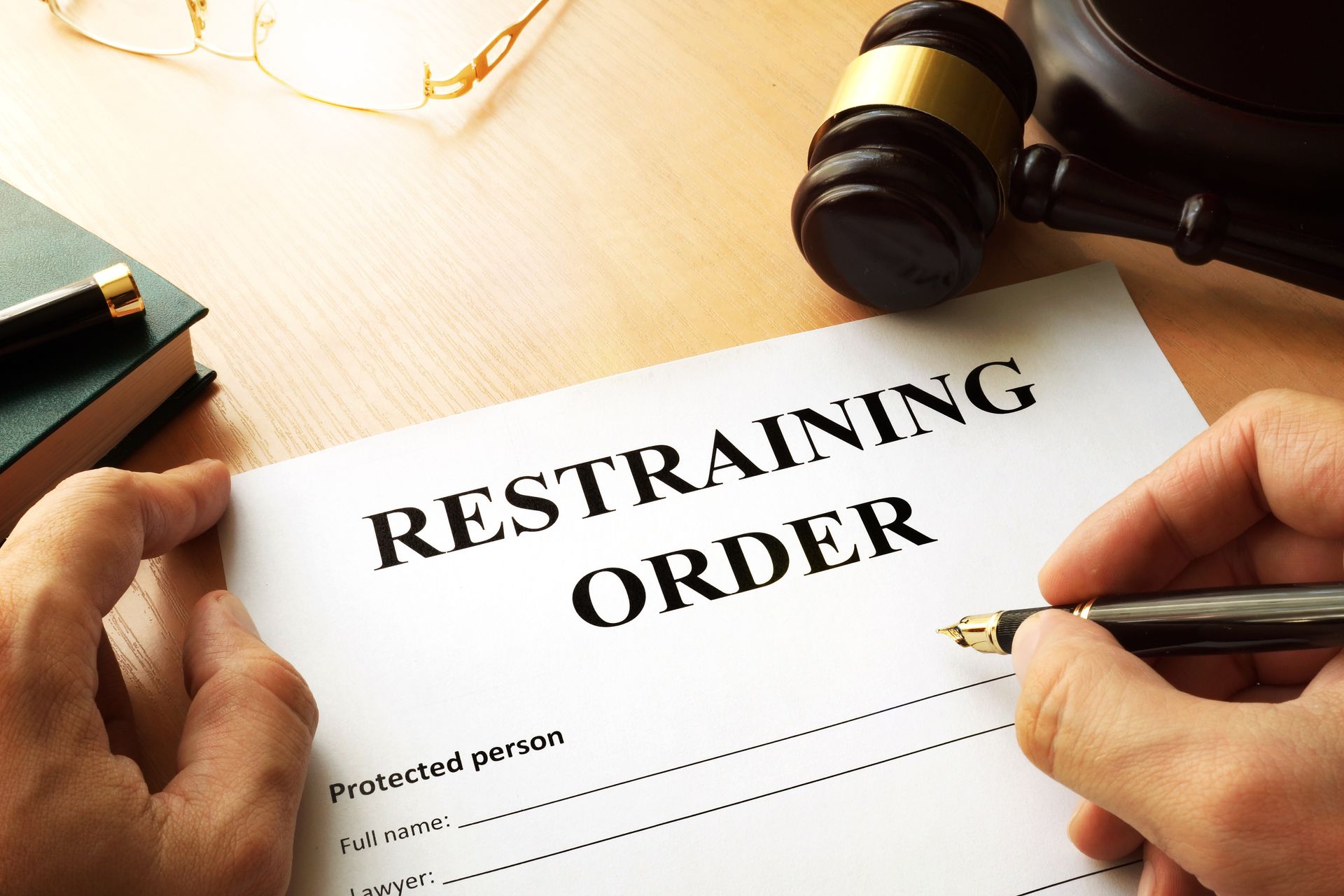
What is a restraining order?
A restraining order is a court order restricting contact between individuals. These matters may involve domestic violence, stalking, repeat violence, or harassment allegations.
How quickly are hearings scheduled?
Hearings are often scheduled within days after filing. Because the timeline can move quickly, these matters require prompt legal attention and preparation.
Can restraining orders affect custody?
Yes. Restraining orders may impact parenting arrangements and time-sharing. The court may consider safety, contact restrictions, and the child’s best interests.
Family Law Appeals FAQs

Can family law decisions be appealed?
Yes, depending on the legal circumstances. Appeals may be available when a legal error may have affected the outcome of a family law case.
How long do appeals take?
Timelines vary depending on the appellate court. Appeals often require careful review of the trial court record, legal procedure, and written legal arguments.
Is an appeal a new trial?
No. Appeals review the existing court record. They focus on legal arguments, court procedure, and whether legal error may have affected the outcome.
Getting Started FAQs

When should I speak with a family law attorney?
You should speak with a family law attorney as early as possible if you are facing divorce, custody issues, support disputes, relocation, property division, arbitration, restraining orders, or appeals. Early guidance can help you understand your options and avoid preventable mistakes.
Does Monica I. Salis, P.A., handle family law matters throughout Broward County?
Yes. The firm serves Fort Lauderdale, Broward County, and nearby communities, including Plantation, Weston, Coral Springs, Hollywood, Pembroke Pines, Deerfield Beach, Parkland, Coconut Creek, and Lighthouse Point.
What should I bring to an initial consultation?
Bring any court documents, financial records, parenting plans, support orders, correspondence, agreements, and notes about your goals or concerns. The right documents depend on the type of family law matter involved.
Have Questions About Your Family Law Matter?
You do not have to figure out the next step alone. Monica I. Salis, P.A., provides experienced family law and arbitration guidance for individuals and families throughout Fort Lauderdale and Broward County.
Schedule A FREE Confidential Consultation